🗝️ Any passwords over 256 characters are fine.
Ref: sshhole.com/
*sshole · sshhole.com
openssh on musl linux has been letting people into password-less accounts since 2016.sshhole.com
🗝️ Any passwords over 256 characters are fine.
Ref: sshhole.com/
openssh on musl linux has been letting people into password-less accounts since 2016.sshhole.com
We have published a report on a security incident on gitlab.alpinelinux.org. An attacker tried to exploit CVE-2026-97229. We found no evidence it succeeded but can't rule it out, so we rebuilt
GitLab from scratch.
Alpine packages and releases were not affected, and no signing keys were exposed.
All GitLab passwords have been reset. If you reused yours elsewhere, change it there.
Someone replies to your post from Mastodon with a photo. Until now, your blog showed the text and dropped the photo. With 9.4.0 that can change.
This release is mostly about what you and your visitors see: images in replies, quotes, and your blog profile. It also contains another round of security fixes, so please update.
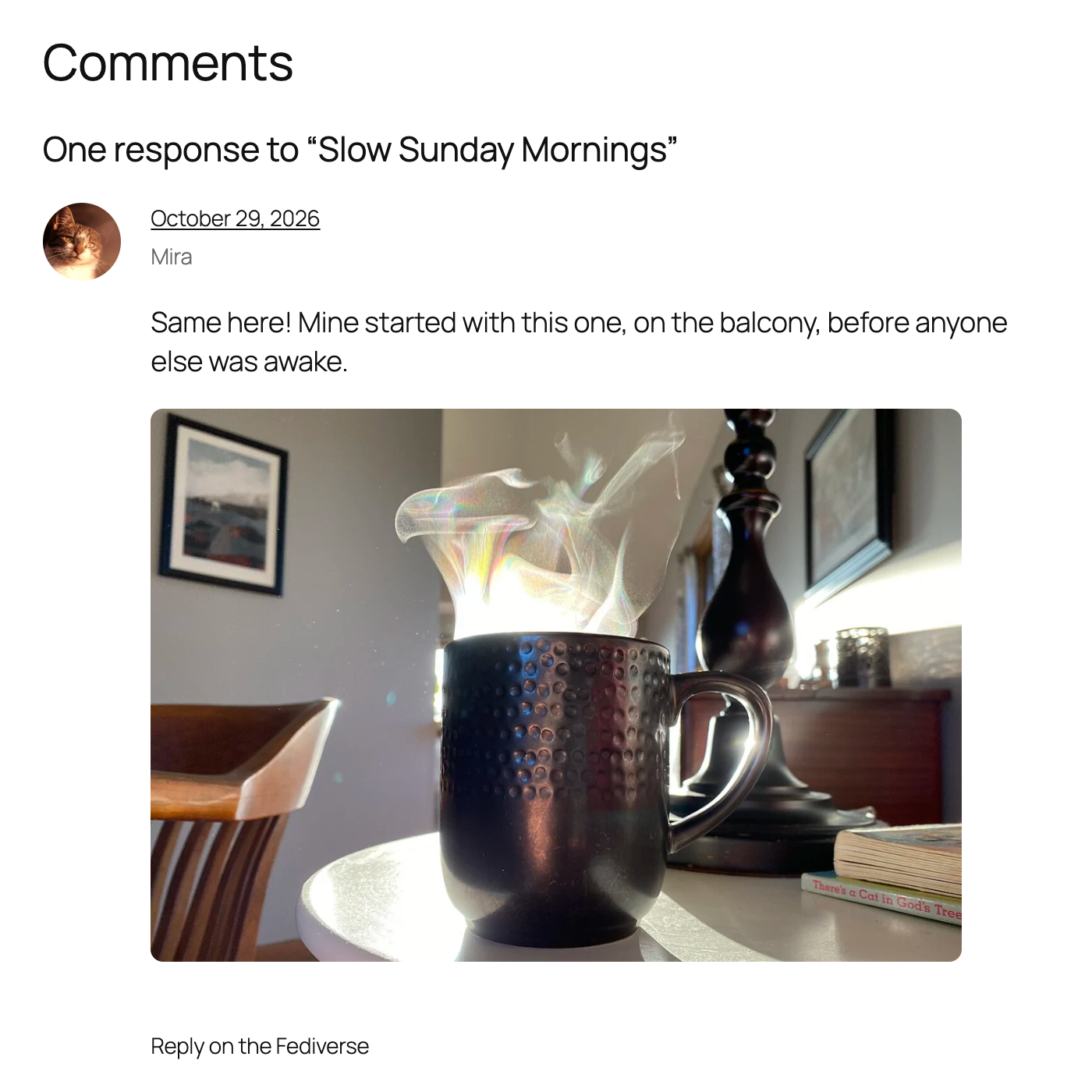
There is a new option in the ActivityPub settings: Show images attached to replies. When you turn it on, images in replies from the Fediverse show up below the comment text. Image descriptions come along, so the images stay accessible. Replies that are only an image, with no text, are accepted too.
The images are cached on your own server, so your visitors never load them from the other server. Up to three images per reply are shown. Images only appear on approved comments. Pending, spam and trashed comments show only their text, and their images are never downloaded.
The option is off by default. WordPress itself does not show images in comments, so this changes how your comment section looks, and we did not want to do that without asking. One thing to keep in mind: if your site approves comments automatically, images from other servers become visible without anyone looking at them first.
If you turn the option off again, the images disappear and the descriptions show as text. Turn it back on and they come back.
Since 7.7.0, your site can receive quotes. Now it can quote, too.
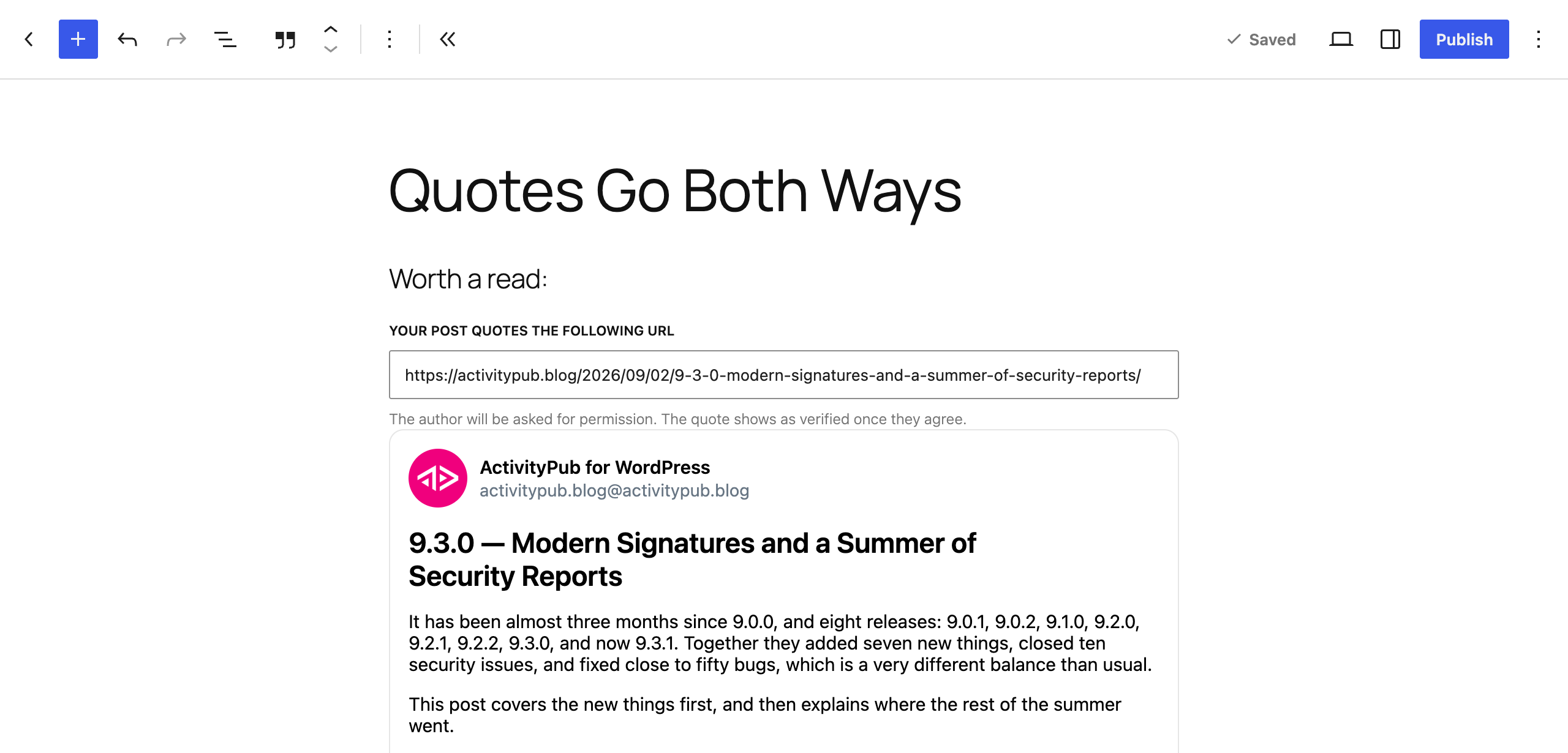
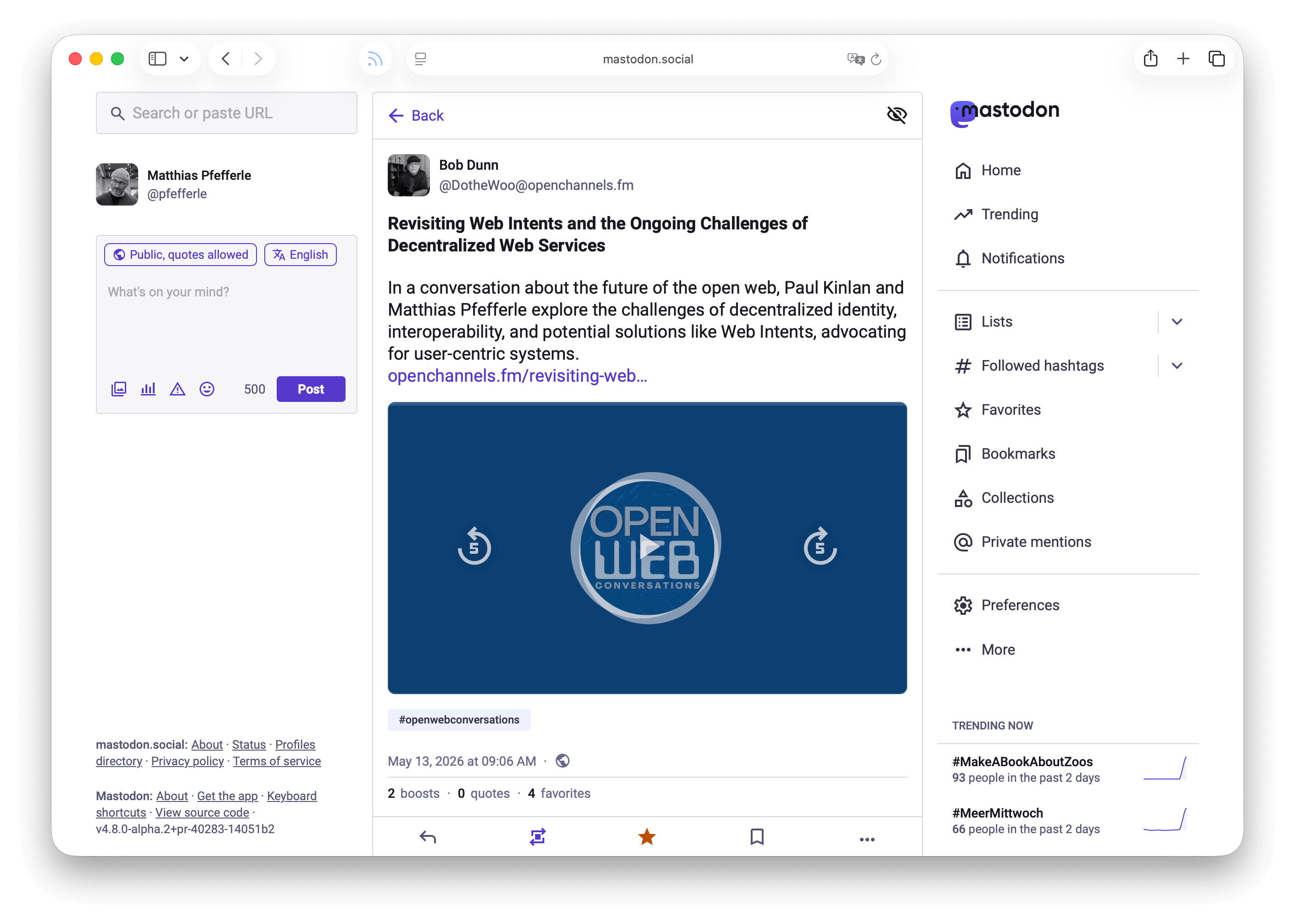
The new Federated Quote block works like the Reply block. Paste the link of a Fediverse post, and the block embeds it in your post. When you publish, your site asks the author of the quoted post for permission. If they agree, your quote is marked as verified on their server. If they decline, your post stays, but the quote turns into a plain link.
The editor shows where the request stands, approved or declined. It also warns you if the author does not allow quotes at all. You can still publish in that case, but the author will probably say no.
There is also a quote bookmarklet on the Tools screen, next to the reply one. Click it on any Fediverse post and you get a new draft with the Quote block already in place.
This depends on the other server. Mastodon supports the permission request since version 4.5. Other software might not answer yet, and then your quote stays unverified.
On the receiving side, the Comments screen has a new Source column. It links incoming replies and quote posts to the post they came from.
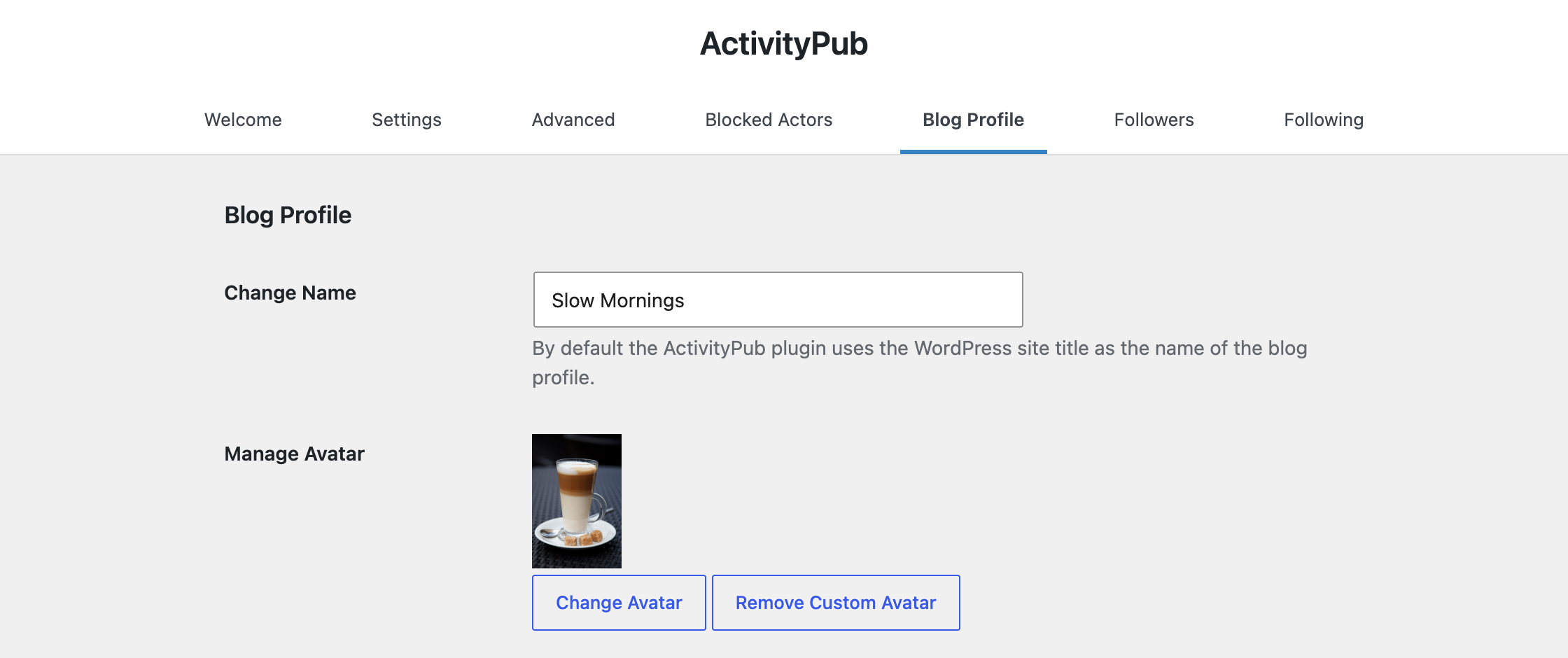
Until now, your blog profile on the Fediverse used your site title as its name and your site icon as its avatar. You can now give it its own. Under Settings → ActivityPub → Blog Profile there is a new name field and an avatar picker. If you leave them empty, nothing changes, and the site title and site icon are used as before.
As in 9.3.0, this release fixes vulnerabilities that were reported to us.
If you run the plugin, please update.
@renée@café.example now work in mentions and search.The full changelog is in the GitHub repository.
Download from WordPress.org or grab it on GitHub. If your site updates automatically, you already have it.
Turn on images in replies, try quoting a post, and let us know how it looks on your site. Which servers answer your quote requests, and which ones stay silent?
A huge thank you to everyone who contributed code, tested early builds, filed bug reports, or reported a security issue for this release.
Connect your site to the Open Social Web and let millions of users follow, share, and interact with your content from Mastodon, Pixelfed, and more.Automattic (WordPress.org)
🔐 The offline master keys were not offline. Zimmer, who ran the largest group of hijacked Tor relays, said so in his post-mortem. Copies sat in a backup on his management server, encrypted with a password the attacker already found. 😬
He was just as blunt about the cause: The root cause was ours: one password reused for SSH login, sudo, and the backup passphrase, stored in plaintext on both servers, plus SSH password authentication left enabled on the internet-facing management server. Credit to him for putting that in writing. 👏 I'd guess plenty of servers out there would earn the same sentence, maybe a few of yours.
In early October, attackers took over more than 300 Tor exit relays and rerouted SSH connections to 12 interception servers. At the peak on October 4, those relays carried 7.46% of Tor's exit capacity, according to an analysis of public directory data. Zimmer's own break-in came earlier. On August 28, the attacker logged into his management server with the account password on the first try and gained root within five minutes.
The victims got hit through passwords too. To get burned, you had to accept the interceptor's host key and type a password. Some people saw an OpenSSH warning that the server had changed... others just got the usual prompt to accept a new key. If you used key-based login, the attacker couldn't pass it through to the real server because the signature is tied to that session.
The backdoor is Ebury version 1.8.3, a single library file that leaves the packaged library alone, so the normal package checks come back clean. Zimmer's servers showed none of the host-level signs on the Tor Projects checklist. The only thing that gave it away was the changed exit policy.
🚨 If you run anything with SSH open to the internet, turn off password login and use keys. If you accepted an unfamiliar or changed host key over Tor between October 1 and 5, assume that password is stolen, change it, and check the server. And if you're poking around a box you suspect, log in with a key, since Ebury captures typed passwords.
Nobody knows yet how the other 58 operators got hit. On FranTech, the network behind BuyVM, 71 of 101 relays switched to the attackers' policy, compared with 13 of 9,054 hosted elsewhere. The researcher who spotted this asked whether the attackers got in at the hosting provider level, and so far nobody has answered.
thehackernews.com/2026/10/atta…
#Cybersecurity #InfoSec #Tor #SSH #Linux #Malware #ThreatIntel #IncidentResponse #RiskManagement #security #privacy #cloud #darkweb
Attackers hijacked over 300 Tor exit relays to intercept SSH connections and steal passwords from users who accepted changed host keys.The Hacker News
das scheint wohl ein wirklich kritischer PHP Fehler zu sein!
#php #Sicherheit #Security #Admin
Zwei Fehler machen Webserver mit PHP aus dem Netz angreifbar. Betroffen: Versionen der letzten 20 Jahre, Admins sollten patchen.Dr. Christopher Kunz (Security)
blog.gslin.org/archives/2026/1…
PHP 的兩包 RCE
#ace #advisory #arbitrary #code #execution #gpt #Gpt56 #language #large #llm #model #openai #php #rce #remote #security #sol #vulnerability
前面在「PHP 的安全性漏洞,預告今天晚上十點 (2026/10/21 14:00 UTC) 更新」提到的 PHP 安全性漏洞的確就是 RCE,在剛剛釋出細節了:「Security advisory: Critical remote code execution vulnerabilities, update now」。 這兩包分別是 OOM 時觸發: RCE via...Gea-Suan Lin (Gea-Suan Lin's BLOG)
🔴 更新完 PHP 先别睡!LiteLLM 又被骇,用户数据又可能泄漏。
受影响版本是 1.107.0。 PyPI 已经撤包。
- twitter.com/SocketSecurity/~- gh:BerriAI/litellm#47826- safedep.io/~
thread: /4832
#Security #LiteLLM #SupplyChain
Telegram 原文
LiteLLM 1.107.0 on PyPI ships a .pth credential stealer and a sitecustomize.py backdoor that run on every Python start. How the implant got in, what it steals, and indicators of compromise.Kunal Singh (SafeDep - Real-time Open Source Software Supply Chain Security)
📣 Announcing the immediate availability of:
- PHP 8.2.35
- PHP 8.3.36
- PHP 8.4.27
- PHP 8.5.12
‼️ These address the following critical security issues:
- Remote Code Execution via Out of Memory corruption (CVE-2026-109618)
- Remote Code Execution via Stale Global State (CVE-2026-109619)
📝 php.net/ChangeLog-8.php
🎁 php.net/downloads?source=Y
Windows: php.net/downloads.php?os=windo…
Read more: php.net/archive/2026.php#2026-…
PHP is a popular general-purpose scripting language that powers everything from your blog to the most popular websites in the world.www.php.net
It's kinda funny that the certificate compromise comes just after another round of upstreams bashing at distro packaging.
Let me get this straight for the people in the back. In a perfect world, you'd just upgrade a single package on your system and be good. Unfortunately, we're far removed from even a reasonably good world.
Pretty much everything that matters in #Python uses certifi. dev-python/certifi in #Gentoo is a fork that uses system certs, so our system install is good. But in every virtual environment (venv, conda, etc.), you need to upgrade certifi.
certifi is also bundled in a bunch of packages, including pip. dev-python/pip in Gentoo has certifi unbundled, but you need to upgrade pip in your virtual environments (using vulnerable pip!). On Gentoo systems, you also need to upgrade dev-python/ensurepip-pip, which is the upstream wheel which we couldn't figure out how to unbundle.
pip is also bundled in Python to bootstrap venvs. In Gentoo, we're configuring Python to use our system dev-python/ensurepip-pip package, so as soon as you upgrade it, you're good. But where this isn't the case, you need to wait for new Python releases and upgrade, because otherwise venvs will start with vulnerable pip. On the plus side, you can remember to upgrade it after creating a new venv.
Lock files are particularly popular in the Python world, and a dependency cooldown is the new fad. You will need to update certifi in them, and exclude it from dependency cooldown.
Many #RustLang packages (think uv) also use a bundled certificate store. All these packages need a lockfile update and rebuilding, meaning downstream patching or new upstream release. So yes, everyone (including Gentoo users, because Rust doesn't really support dynamic linking, great design for #security) need to update uv, and possibly wait to discover more random Rust packages that are vulnerable.
I'm also going to guess that all flatpakers are affected, all popular browsers, and possibly everyone else who knows better than to use distro packaging. All containers are affected, and will need to be rebuilt, with new system certificate stores and all the packages that bundle their own stores…
And the best part is, most of these upstream package distribution systems have no other security layer except for TLS certificates. You can update Gentoo packages safely, because we are using our own key infrastructure. But pip, uv and so on are subject to a MITM risk while upgrading the vulnerable packages.
This is the true definition of clusterfuck.
It has been almost three months since 9.0.0, and eight releases: 9.0.1, 9.0.2, 9.1.0, 9.2.0, 9.2.1, 9.2.2, 9.3.0, and now 9.3.1. Together they added seven new things, closed ten security issues, and fixed close to fifty bugs, which is a very different balance than usual.
This post covers the new things first, and then explains where the rest of the summer went.
Every message your site sends to the Fediverse carries a signature, the digital equivalent of a wax seal on an envelope. In July 2025 we wrote about the move from the old draft format to RFC 9421, the official standard. Back then, sending with the new format was a setting for early adopters, and we promised to turn it on for everyone once the rest of the Fediverse was ready.
With 9.3.0 it is on by default. Your site now signs outgoing requests with RFC 9421, and falls back to the old format when the server on the other side does not understand it yet. For almost everyone this changes nothing you can see. Your posts keep arriving, your follows keep working.
A small number of servers advertise support for the new format but handle it differently in practice. If your posts suddenly stop arriving on one particular server after this update, you can switch back. Open the ActivityPub settings, click Screen Options in the top right, enable Advanced Settings, and turn off the modern signature format in the Advanced tab. Please let us know in the support forum which server it was, so we can look into it.
If you publish podcast episodes with Jetpack, your episodes now federate as episodes. The audio file and the cover art travel with the post, so your followers get a playable player in their Fediverse app instead of a link they have to click through.
Version 9.1.0 did the same for Podlove Podcast Publisher, where the episode summary now goes out with the post rather than being dropped.
Likes, reposts, and quotes are lovely until there are two hundred of them and your email inbox has two hundred entries. Until now, switching those off meant switching off notifications for real comments and replies too.
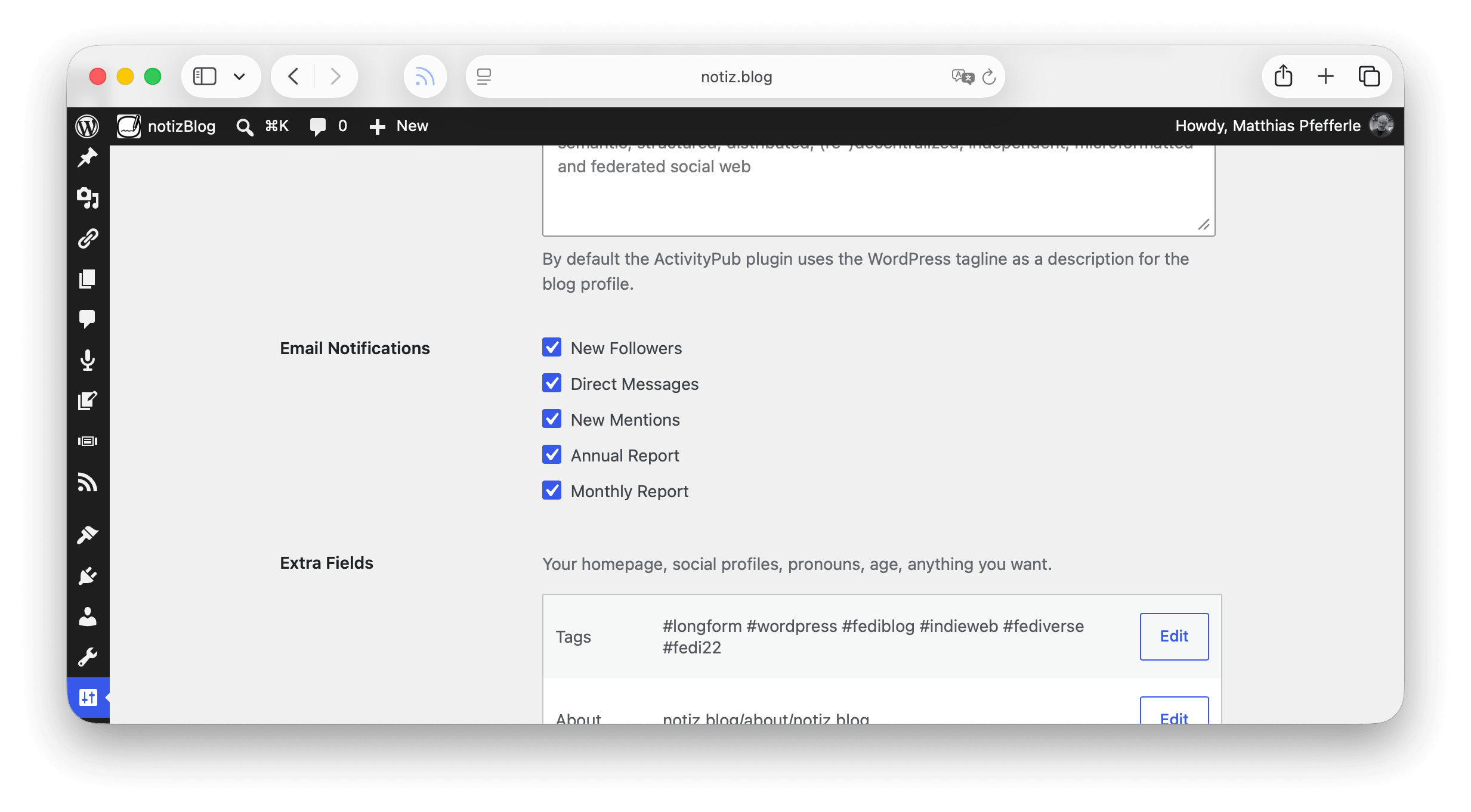
9.3.0 separates them. There is a new notification setting that turns off emails about likes, reposts, and quotes, while comments and replies from the Fediverse keep reaching you. Reactions still show up on your post, you just stop hearing about each one individually.
9.1.0 added an actor autocomplete endpoint, so a Fediverse app connected to your site can offer typeahead search when you are mentioning someone. There is also a new filter for sites that need to federate inside a private or internal network, which mostly matters for intranets and staging setups.
In 9.3.0, apps connected through the ActivityPub API now use the standard permission names from the specification, and fetching remote content through your site counts as reading rather than posting. Apps also see the real error when a post is missing, instead of a generic failure that told them nothing.
Seven new things in three months is not much. Here is the reason.
Since June we have had a steady stream of security reports. Ten of them became entries in the changelogs of 9.1.0 and 9.3.0, and a few more landed quietly as fixes. Every report has to be read, reproduced, judged, fixed, tested, and shipped, and the fix has to be written so it does not break the sites that already work. For a team our size that is most of a week each time, sometimes more.
This is not a complaint, and a real thank you to everyone who sent a report and then waited while we worked through the queue. Nearly all of the reports were real, and every one of them made the plugin safer for the people running it. This is responsible disclosure working the way it should. It just means the roadmap moves slower than it looks on paper, and features that were planned for July are still open.
We are not alone in this. WordPress core is seeing the same wave, and for the same reason: AI models have become good enough at reading code that finding a plausible vulnerability is now cheap. The security team wrote about it in The Core Security Initiative, and the project started Protect The Shire to review the code in the plugin and theme directories at a scale that was not possible before. The same tools that raise the number of reports also help everyone work through them. On balance, we think this is good for the ecosystem, even on the weeks where it does not feel like it.
In general terms, the security work in these releases covers four areas:
We are keeping this vague on purpose. The details are in the reports, and we would rather not hand a recipe to anyone whose site has not updated yet. If you run the plugin, please update.
The fifty or so fixes across these releases are not one story, but they fall into a few groups:
The full, item-by-item changelog for every release is in the plugin’s changelog if you want to read it in detail.
Download from WordPress.org or grab it on GitHub. If your site updates automatically, you already have it.
Thanks to everyone who filed a bug report with steps we could follow. Those are the ones that get fixed fastest.
Now that signatures are modern by default: does anything still deliver differently for you? And what would you like to see us build once the queue is shorter?
Over the past year, the WordPress project has seen a substantial increase in the volume of incoming security reports. Much of this growth reflects the rapid advancement of frontier AI models and th…Rudy Faile (Making WordPress Secure)
#CDN的收藏夹
FW: bupt.moe - Telegram
#security
《促进分布式数字身份互通互认应用规定(征求意见稿)》
**第六条 **境内实名身份凭证依照其身份类别,按照以下方式自愿申请和签发:
(一)个人用户由国务院公安部门核验身份后,通过身份链签发身份凭证。
(二)机关事业单位用户向中央机构编制部门申请身份数据核验,通过身份链签发身份凭证。
(三)法人及其他组织机构用户向统一社会信用代码管理部门申请身份数据核验,通过身份链签发身份凭证。
(四)工业设备及物品由国务院工业和信息化部门依托工业互联网标识解析体系负责注册、核验身份数据,通过身份链签发身份凭证。
...
**第十一条 **用户可根据应用需要向可验证凭证签发机构申请承载用户特定属性信息的可验证凭证,经可验证凭证签发机构对用户属性信息核验后,向用户签发可验证凭证。
**第十二条 **用户可根据业务场景需求,自行签发数据授权凭证、业务代办凭证等带有特定功能需求的凭证。
...
**第十六条 **分布式数字身份使用的密码算法、密钥存放设备应符合密码相关国家标准、行业标准或国家密码管理相关规定。
...
(四)可验证凭证是指将现实世界中具有一定权威属性的证明(如身份证、学历证书、资质文件等)转化为标准化、可编程的数字化声明,其与分布式数字身份绑定,能够通过安全可靠技术手段进行真实性验证。
(五)可验证声明是基于可验证凭证的描述性声明,允许持有者选择性披露部分或全量信息。
blog.gslin.org/archives/2026/0…
美國政府出手禁止 Anthropic 提供 Fable 5 服務
#5 #ai #anthropic #control #export #fable #government #language #large #llm #model #mythos #national #security #states #united #us
如標題,炸了:「Statement on the US government directive to suspend access to Fable 5 and Mythos 5 (via)」。 下出口管制禁令,而且包括 Anthropic 內非美國籍的員工: The US government, citing national security authorities, has issued an export control directive to suspend...Gea-Suan Lin (Gea-Suan Lin's BLOG)
blog.gslin.org/archives/2026/0…
拔掉 Toyota 2024 RAV4 Hybrid 車上的連網能力 (以及 GPS)
#car #carplay #communication #concern #data #dcm #gps #modem #module #privacy #security #toyota
上個禮拜看到很歡樂的文章,作者把他 2024 RAV4 Hybrid 車上的 modem 與 GPS 接收天線都拔掉了:「Removing the Modem and GPS from my 2024 RAV4 Hybrid (via)」。 主要是現在的車子會收太多數據資料傳回去了,作者有列出很多之前上過新聞的 privacy...Gea-Suan Lin (Gea-Suan Lin's BLOG)