
Mutual Aid Request Roundup 21 Oct 2026
1,929 words
8–12 minutes
How Many More Victims?
Hundreds of people broke through the barricades at the Central Kalimantan governor’s office in Palangka Raya on Monday afternoon, on the eve of the Prabowo-Gibran government’s second anniversary. The Aliansi Masyarakat Kalteng Melawan came with student councils, among them BEM UI, whose members flew in from Jakarta. Their central demand was that Jakarta declare the fires in Central Kalimantan a national disaster. Governor Agustiar Sabran came out and sat with them, then left to pray at the Asr call and did not return. The crowd took the courtyard. Organisers say a fourth and larger demonstration is coming. The haze has run for four months.
The Health Ministry counted 314,124 acute respiratory infection cases in fire-affected areas between 20 August and 20 October, across seven provinces and 65 districts and cities. Children aged 0 to 5 make up 70,890 of them. Tuesday alone added 3,269. As of Tuesday afternoon, Central Kalimantan had 295 “oxygen houses” running, South Kalimantan 127 and West Kalimantan 35. On 16 October, IQAir recorded air pollution in Palangka Raya in the hazardous range, with an air quality index above 300. Kompas reported on 17 October the death of a six-year-old, suspected to be from a respiratory infection, whose uncle asked: “Nunggu korban berapa lagi?” How many more victims are we waiting for? The smoke disrupted 390 flights across Kalimantan, with Central Kalimantan hit worst. The ministry’s advice is to stay home, work or study online where possible and wear an N95 or KN95 mask. It carves out field workers and public service staff. The people whose jobs cannot move online keep breathing it.
On 14 October anti-corruption investigators named five suspects over alleged corruption involving emergency funds at the national disaster agency, BNPB, following raids earlier that week. Among the suspects was the brother of BNPB head Suharyanto, who was replaced the next day. Two days before the suspects were named, Prabowo had expressed surprise at a report that only 639.23 hectares remained burning across six provinces, having expected tens of thousands. The Cabinet Secretariat’s own account described those 639 hectares as land undergoing firefighting operations. Syahganda Nainggolan, who heads the government communications office, has called the fires “beyond human error” and “truly nature”.
Arniyanti of Lembaga Gemawan says over 70 percent of the fire spots sit inside company concessions. Police were investigating 96 companies in August and the government had imposed administrative sanctions on 26. Environmental group Pantau Gambut identifies industrial-scale plantation development and peatland drainage as causes of the degradation that leaves peatlands vulnerable to fire. Boy Jerry Even Sembiring, executive director of Walhi, says accountability must reach those who control and profit from land ownership. In Pontianak a coalition led by Nafas Kalbar, with Indigenous people and religious youth groups among the plaintiffs, is suing the president, the vice-president, ministers and the national police chief for negligence, and asking for a national emergency declaration, free health care for vulnerable groups and prosecutions. Seven residents did this after the 2015 fires, won at district court, and saw the decision overturned in 2022. The plantation is a colonial invention and the concession is its descendant: land organised around a return collected somewhere other than where the smoke settles. Singapore has raised the prospect of fines or charges against companies responsible for the fires. Smoke that crosses a border gets a lawyer. Smoke that stays inside it gets “truly nature.”
I write as an Indonesian, and the part I will not let a ministry’s advice bury is that this ledger runs in one direction everywhere. In Palangka Raya the price of cheap land is booked to children’s lungs. In Gaza it is booked to a flour price, while WFP pleads for $450 million against the $2.8 billion in bombs Washington approved for Israel in September. Households in Iran absorb a blockade whose squeeze on raw materials reaches the medicine they depend on. Jakarta sits inside the same arrangement. In February Prabowo pledged 8,000 troops “or more” to Trump’s Gaza stabilisation force, and Al Jazeera’s 13 October roundup records that no stabilisation force has deployed. The state that signs up to Washington’s arrangements and the state that issued the concessions are one state, and neither answers to the people downwind of either.
The people behind the requests below are downwind of the same decisions. A concession map, a bomb sale and a blockade look like three different stories, and they share one method: capital extracts, the cost is booked to whoever lives closest to it, and the institutions meant to catch the fall are underfunded, looted or answering to someone else. In Kalimantan the fall is a six-year-old’s lungs, while the national disaster agency’s emergency funds are under investigation. In Gaza, it is the soaring cost of staple foods. For a person with overdue rent, medication running out in days or a stalled disability payment, it arrives as a bill. These struggles connect because one system produces them, and because the same absence meets each one: nobody official is coming.
Direct action here means closing the gap ourselves, this week. The ministry says to stay home and buy an N95, which assumes the money exists. Mutual aid supplies it: a transfer from someone with a little to someone with none, with no concession, ministry or committee in between. Every request below belongs to a person who has already tried the official routes. Give to the ones you can, share each one in the group chats where you already hold trust, and ask one person with money to match what you gave. The state is still deciding what to call this. A household needs its answer now.
A note before the list: mutualaidspace.org’s submission form is live. Submitting a request there gets it federated as @comrade, automatically tagged for wider reach, and listed publicly under Comrades & Community or Victims of Empire, whether or not the person asking has a Fediverse account of their own. No verification process, no proof of suffering required. More on the project itself: mutualaidspace.org/about
✨Mutual Aid Roundup✨
@ctrlaltglitch @starryeyes @blaurascon @kitwinter @KestrelSWard @thereaders @sickandtired @tiredpinklover @roxy @lowroarrawr
✨Palestinian Campaign Spotlight✨
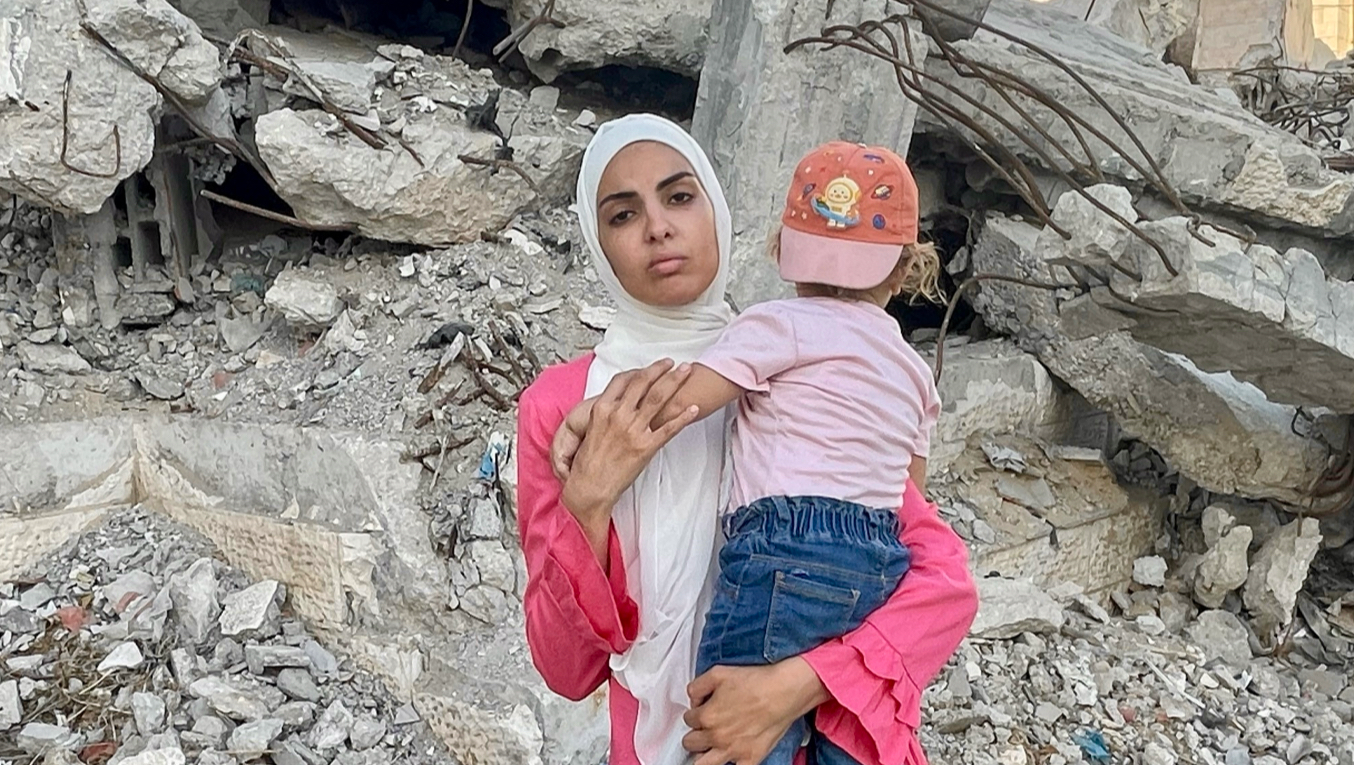
Together for Marah & Mila: Surviving the War in Gaza
Marah has been running a fever above 39°C and was too weak to post for days. She says she has not received enough support, and her health is not okay. Her campaign carries her family through the siege [View original post]
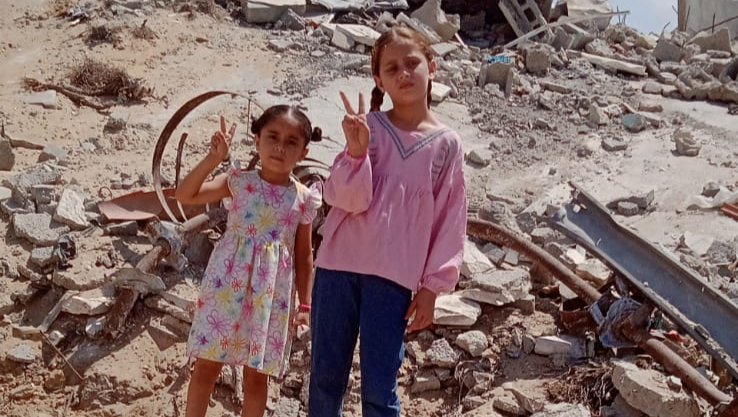
Save Hadeel and her children
Hadeel is a mother of two young daughters living in a tattered tent in Gaza. With winter, storms and bitter cold arriving, rainwater floods the space. She urgently needs a tent and tarpaulins to protect her children [View original post].
Gaza Verified Archive
Verified Palestinian campaigns under $200
These are verified Palestinian accounts whose campaigns received less than $200 in the past 7 days.
Nine of many. The archive holds the rest.
@EngFarahGaza@mastodon.social @HadeelMohammed@mastodon.social @hadeel_2026@mastodon.world @samour1997@mastodon.social @tareqradi@mastodon.social @danyarelkhodari@mastodon.social @mhoeed@mastodon.social @aseelfromgz@mastodon.social @maher553533@mastodon.social
Open the archive, find the campaign link on each account, give directly where possible, and share the campaign links that need movement.
View underfunded campaign list About Gaza Verified Campaigns
@mutualaid @mutualaid @disability @disability @autistics @actuallyadhd @theleftistlawyer @frugalcoffee @wrzky @wrzky @edendestroyer @QasimRashid #Gaza @palestine @indonesia @indonesia #Palestine #genocide #mutualaid #anarchism #internationalism #MutualAidRequest #DisabilityMutualAid #MutualAidSpace #DisabilityCrowdfund #TransMutualAid #QueerMutualAid #lgbtq #politics #EmergencyCrowdfund #GazaMutualAid #poverty #healthcare #mentalhealth #disability #neurodivergence #activism #fedihelp #fediverse #HelpFolksLive2026 #socialmedia #BlackMutualAid #writer #MutualAidVoid #helpsky #press #SEAblings #fediforgaza #Indonesia #wildfires #iran
🗣️Support Corner🗣️
📱Share this article far and wide. Subscribe to get this update in your inbox!
This space is held together by a disabled Indonesian Muslim woman. Monthly support keeps me fed, medicated, and connected, and helps me keep resisting corporate funding and the humanitarian-industrial complex through my writing and mutual aid projects.
If you find this voluntary work worth supporting, please do so by pledging as little as $1 monthly via Liberapay or other tiers available across Liberapay, ko-fi, and Patreon. One-off support helps too. Any amount genuinely helps.
Ko-fi voluntary monthly support
Liberapay voluntary monthly support
About
Hi, I'm Wanda Welcome! I’m Glad You’re Here. I’m Wanda, a disabled Indonesian Muslim woman. I write about empire, faith, political theology, gender, disability, family, survival, and the systems that teach people to mistake obedience for peace.wrzky (WRZKY)

